Crypto Regulation in UK 2026: Laws, Taxes & FCA Rules Explained

Table of Contents

What Is Crypto Regulation in UK and Why It Matters?

Crypto regulation in UK refers to the legal framework created to control how cryptocurrencies are traded, taxed, and managed within the country. It is mainly supervised by the Financial Conduct Authority, which ensures that crypto businesses follow strict financial compliance rules.

The goal of crypto regulation in UK is to:

  • Protect investors from fraud and scams
  • Improve transparency in crypto transactions
  • Regulate exchanges and service providers
  • Support safe innovation in digital assets

As crypto adoption grows, crypto regulation in UK is becoming more structured and strictly enforced.

Latest Crypto Regulation in UK (2026 Updates)

The 2026 update of crypto regulation in UK introduces stronger compliance and reporting requirements for both individuals and businesses.

FCA Registration Requirement

All crypto companies must register with the FCA and comply with anti-money laundering (AML) rules.

Advertising Standards

Crypto ads must clearly display risk warnings and avoid misleading claims.

Stablecoin Oversight

Stablecoins are now treated more like regulated financial instruments.

Transaction Monitoring

Authorities require exchanges to monitor suspicious activity and report it.

These updates show how crypto regulation in UK is tightening to improve market security.

Crypto Tax Rules Under UK Regulation

Taxation is a key part of crypto regulation in UK, enforced by HM Revenue & Customs (HMRC).

In 2026, crypto assets are treated as taxable property. This includes:

  • Capital Gains Tax on profits from trading
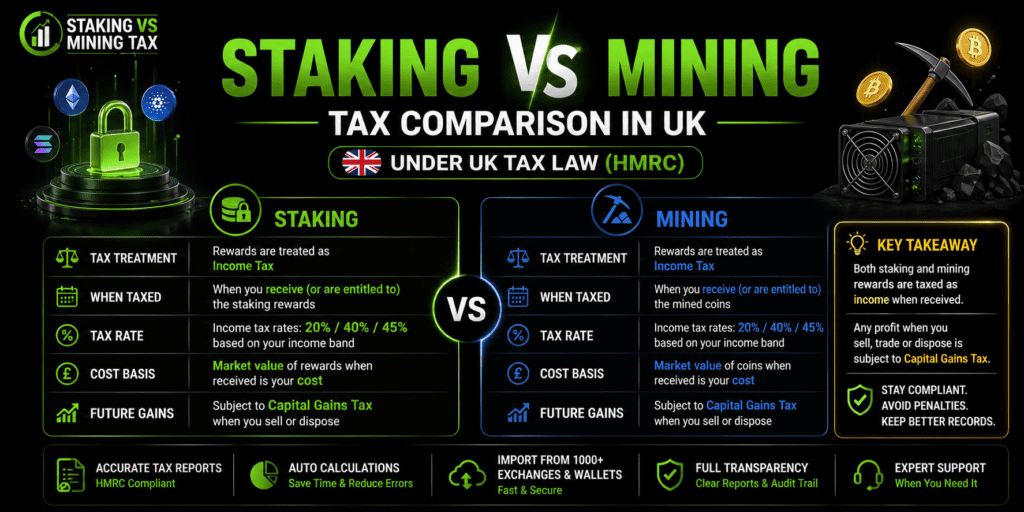
  • Income Tax on mining and staking rewards
  • Reporting all transactions accurately

Failure to comply with crypto regulation in UK tax requirements can result in penalties or investigations.

How Crypto Regulation in UK Affects Investors

The impact of crypto regulation in UK is both positive and challenging for investors.

Positive Effects:

  • Stronger investor protection
  • Reduced fraud and scams
  • Increased institutional participation
  • Greater market stability

Challenges:

  • Higher tax reporting obligations
  • Reduced anonymity in transactions
  • More compliance requirements

Overall, crypto regulation in UK is designed to create a safer but more controlled market.

Role of FCA in UK Crypto Regulation

The Financial Conduct Authority plays a central role in enforcing crypto regulation in UK.

Its responsibilities include:

  • Licensing crypto businesses
  • Monitoring compliance
  • Enforcing anti-money laundering laws
  • Protecting retail investors

Without FCA approval, crypto companies cannot legally operate in the UK market.

Future of Crypto Regulation in UK (2026 and Beyond)

The future of crypto regulation in UK is expected to become even more advanced and technology-driven.

Key developments include:

  • Introduction of a potential Digital Pound (CBDC)
  • Stronger DeFi oversight frameworks
  • AI-based compliance monitoring systems
  • Global regulatory alignment

These changes indicate that crypto regulation in UK will continue to evolve with innovation.

assets.

Risks and Limitations of Crypto Regulation in UK

While crypto regulation in UK improves safety, it also introduces some challenges:

  • Reduced privacy for users
  • Increased compliance costs for businesses
  • Limited access to certain global exchanges
  • Slower innovation in some decentralized systems

Investors must adapt to these evolving rules to remain compliant.

Best Practices for UK Crypto Investors

To stay compliant with crypto regulation in UK, follow these best practices:

Use FCA-Registered Platforms

Always choose regulated exchanges for trading.

Keep Transaction Records

Maintain detailed records for tax reporting.

Understand Tax Obligations

Know how Capital Gains Tax applies to your crypto profits.

Stay Updated

Crypto regulation in UK changes frequently, so monitor updates regularly.

FAQs

What is crypto regulation in UK?

It is the legal framework that governs how cryptocurrencies are traded, taxed, and managed in the UK.

Is crypto legal in the UK?

Yes, crypto is legal but strictly regulated by the Financial Conduct Authority (FCA).

Do I need to pay tax on crypto in the UK?

Yes, crypto profits are subject to Capital Gains Tax or Income Tax.

Which authority regulates crypto in the UK?

The Financial Conduct Authority (FCA) is the main regulator.

Will crypto regulations become stricter in the UK?

Yes, future regulations are expected to increase compliance and transparency.

Latest Articles

Stay Connected

Inquiry Form
Crypto Regulation in UK 2026: Laws, Taxes & FCA Rules Explained

7 Crypto Tax Accountants: Expert Crypto Accounting & Tax Filing Services

Need reliable crypto accounting and tax filing services? Contact 7 Crypto Tax Accountants today by call or email to get expert support.

Conclusion

Crypto regulation in UK is reshaping the future of digital assets in 2026. While it introduces stricter rules, it also enhances investor safety, transparency, and long-term market stability.

For investors, understanding and following crypto regulation in UK is essential for avoiding penalties and building a secure investment strategy.

As the UK continues to strengthen its regulatory framework, the crypto market is expected to become more trustworthy and globally competitive.

DISCLAIMER

The information presented in this blog is sourced from publicly available and third-party materials. 7 Crypto Tax Accountants does not claim ownership of this content and provides it for general informational purposes only.

7 Crypto Tax Accountants makes no representations or warranties regarding the accuracy, completeness, or reliability of the information. You should not treat this content as financial, legal, or tax advice.

7 Crypto Tax Accountants is not responsible for any decisions, losses, or damages resulting from the use of this information. Until You  consult with 7 Crypto Tax Accountants before taking any action related to crypto taxation or financial matters.