Do Non-Residents Pay Tax on Crypto in UK? (2026 Guide)
With the global nature of cryptocurrency, many investors ask: do non-residents pay tax on crypto in UK? The answer depends on residency status, source of income, and connection to the UK.
Understanding how HM Revenue and Customs treats crypto for non-residents is essential to avoid penalties and stay compliant.
This guide explains everything about do non-residents pay tax on crypto in UK, including key rules, exceptions, and best practices.
What Determines Tax Residency in the UK?
Before answering do non-residents pay tax on crypto in UK, it is important to understand residency.
The UK uses the Statutory Residence Test (SRT) to determine whether you are:
UK Resident
Non-Resident
Factors include:
Number of days spent in the UK
Ties to the UK (work, family, property)
Your tax obligations depend heavily on this status.
Do Non-Residents Pay Tax on Crypto in UK?
In general, non-residents do NOT pay UK tax on crypto gains unless specific conditions apply.
✅ When Non-Residents Do NOT Pay Tax:
Crypto is held as a personal investment
Gains are made outside the UK
No UK business activity involved
⚠️ When Non-Residents MAY Pay Tax:
Crypto is connected to a UK business
Income is sourced within the UK
Trading activity qualifies as a UK trade
So, the answer to do non-residents pay tax on crypto in UK is: usually no, but exceptions exist.
Capital Gains Tax for Non-Residents
Capital Gains Tax (CGT) is a key part of do non-residents pay tax on crypto in UK.
Non-residents generally do not pay CGT on crypto
Crypto is considered an intangible asset
UK CGT mainly applies to UK residents
However, if crypto is linked to UK business activities, CGT may apply.
Income Tax on Crypto for Non-Residents
Income tax may apply depending on how crypto is earned.
Taxable Situations:
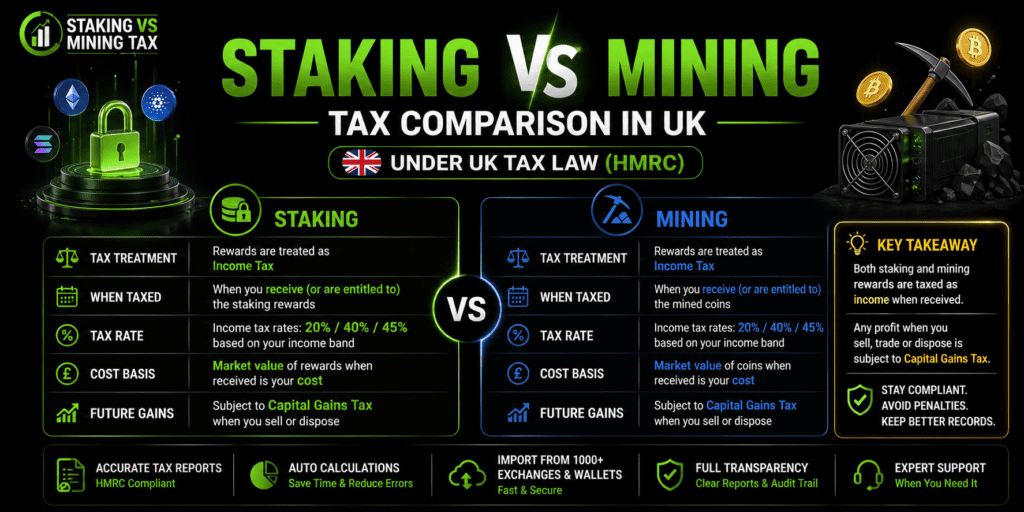
Mining conducted in the UK
Staking rewards linked to UK operations
Crypto payments for services performed in the UK
In such cases, do non-residents pay tax on crypto in UK becomes yes under income tax rules.
Crypto Business Activities in UK
If a non-resident runs a crypto business in the UK:
Profits may be taxed in the UK
Business income is subject to UK tax laws
HMRC may require reporting
This is an important exception in do non-residents pay tax on crypto in UK.
Double Taxation Agreements (DTA)
The UK has agreements with many countries to prevent double taxation.
These agreements ensure:
You don’t pay tax twice on the same income
Tax is paid in the correct country
DTAs play a key role in do non-residents pay tax on crypto in UK decisions.
Reporting Requirements
Even if no tax is due, some non-residents may still need to:
Maintain transaction records
Report UK-related income
Provide documentation if requested
Proper documentation is essential for compliance.
Risks of Non-Compliance
Ignoring rules related to do non-residents pay tax on crypto in UK can lead to:
Financial penalties
Investigations by HM Revenue and Customs
Legal consequences
It is always better to stay compliant and informed.
Best Practices for Non-Residents
To handle do non-residents pay tax on crypto in UK correctly:
Understand Your Residency Status
Confirm whether you qualify as non-resident.
Keep Detailed Records
Track all crypto transactions.
Avoid UK-Based Trading Activity
Unless you understand tax implications.
Consult a Tax Advisor
Especially for complex situations.
FAQs
Do non-residents pay capital gains tax on crypto in UK?
No, unless the crypto is linked to UK business activities.
Are crypto earnings taxable for non-residents?
Yes, if the income is generated within the UK.
What authority regulates crypto tax in UK?
HM Revenue and Customs (HMRC).
Do non-residents need to report crypto?
Only if they have UK-based income or business activity.
So, do non-residents pay tax on crypto in UK? In most cases, non-residents do not pay tax on crypto gains. However, if crypto is connected to UK income or business activity, tax obligations may arise.
Understanding residency rules, income sources, and HMRC guidelines is essential for staying compliant and avoiding penalties.
The information presented in this blog is sourced from publicly available and third-party materials. 7 Crypto Tax Accountants does not claim ownership of this content and provides it for general informational purposes only.
7 Crypto Tax Accountants makes no representations or warranties regarding the accuracy, completeness, or reliability of the information. You should not treat this content as financial, legal, or tax advice.
7 Crypto Tax Accountants is not responsible for any decisions, losses, or damages resulting from the use of this information. Until You consult with 7 Crypto Tax Accountants before taking any action related to crypto taxation or financial matters.