Table of Contents
What Are Crypto Tax Rules in UK 2026?
Crypto tax rules in UK 2026 refer to the legal guidelines set by HM Revenue and Customs for taxing cryptocurrency transactions.
In the UK, crypto is not considered currency but a taxable asset. This means that profits, income, and certain transactions involving crypto are subject to taxation.
Understanding crypto tax rules in UK 2026 is essential for investors, traders, and anyone involved in digital assets.
How Crypto Is Taxed in the UK
Under crypto tax rules in UK 2026, cryptocurrency transactions fall into two main categories:
Capital Gains Tax (CGT)
You pay Capital Gains Tax when you:
- Sell crypto for profit
- Trade one crypto for another
- Use crypto to buy goods or services
Income Tax
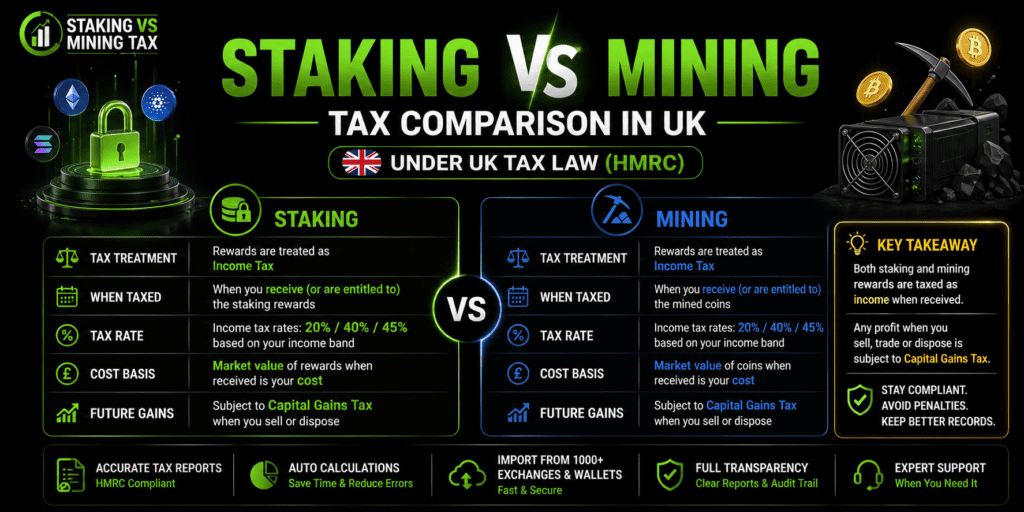
You pay Income Tax when you:
- Receive crypto as payment
- Earn rewards from staking
- Mine cryptocurrency
These categories form the foundation of crypto tax rules in UK 2026.
Crypto Tax Rates in UK 2026
The tax rates under crypto tax rules in UK 2026 depend on your income level.
Capital Gains Tax Rates:
- Basic rate taxpayers: 10%
- Higher rate taxpayers: 20%
Income Tax Rates:
- 20%, 40%, or 45% depending on income bracket
These rates apply to profits calculated under crypto tax rules in UK 2026.
Crypto Tax-Free Allowance UK 2026
Under crypto tax rules in UK 2026, individuals are allowed a tax-free Capital Gains allowance.
- Annual CGT allowance (subject to updates)
- Only profits above this threshold are taxed
Using this allowance wisely can reduce your tax liability under crypto tax rules in UK 2026.
What Transactions Are Taxable?
According to crypto tax rules in UK 2026, the following actions are taxable:
- Selling cryptocurrency for fiat
- Trading crypto assets
- Spending crypto
- Gifting crypto (in some cases)
Non-taxable events may include:
- Holding crypto
- Transferring between your own wallets
Understanding taxable events is key to complying with crypto tax rules in UK 2026.
How to Calculate Crypto Tax
To follow crypto tax rules in UK 2026, you need to calculate your gains accurately.
Basic Formula:
Capital Gain = Selling Price – Purchase Price
You must also consider:
- Transaction fees
- Exchange rates
- Pooling rules (HMRC method)
Accurate calculations ensure compliance with crypto tax rules in UK 2026.
How to Report Crypto Tax in UK
Reporting is an essential part of crypto tax rules in UK 2026.
Steps include:
- Keep records of all transactions
- Calculate total gains and income
- Report through Self Assessment tax return
- Submit before HMRC deadlines
Failure to report correctly may result in penalties.
Penalties for Not Reporting Crypto Tax
Ignoring crypto tax rules in UK 2026 can lead to serious consequences:
- Financial penalties
- Interest on unpaid tax
- HMRC investigations
- Legal action in severe cases
Compliance is critical to avoid these risks.
Benefits of Understanding Crypto Tax Rules
Following crypto tax rules in UK 2026 provides several benefits:
- Avoid penalties and fines
- Better financial planning
- Legal compliance
- Peace of mind
Common Mistakes to Avoid
Many investors fail to comply with crypto tax rules in UK 2026 due to:
- Not tracking transactions
- Ignoring small trades
- Misunderstanding taxable events
- Failing to report staking income
Avoiding these mistakes ensures smooth tax filing.
Best Practices for UK Crypto Investors
To stay compliant with crypto tax rules in UK 2026, follow these tips:
Keep Detailed Records
Track every transaction and wallet activity.
Use Tax Tools
Use crypto tax calculators for accuracy.
Understand HMRC Rules
Stay updated with changes from HM Revenue and Customs.
Seek Professional Advice
Consult a tax expert if needed.
Future of Crypto Tax in UK
The future of crypto tax rules in UK 2026 is evolving with technology.
Key trends:
- Increased regulation and reporting
- Integration of blockchain tracking tools
- Stronger enforcement by HMRC
- Possible updates in tax allowances
These changes will shape the future of crypto taxation in the UK.
FAQsDo I have to pay tax on crypto in the UK?
Yes, crypto is taxable under Capital Gains Tax or Income Tax depending on usage.
Is holding crypto taxable in the UK?
No, holding crypto is not taxable until you sell or trade it.
How do I report crypto taxes in the UK?
Through HMRC Self Assessment tax return.
What is the crypto tax allowance in UK?
It is the annual CGT allowance set by HMRC.
Can HMRC track crypto transactions?
Yes, HMRC uses data-sharing agreements and blockchain analysis tools.
Latest Articles
Stay Connected
7 Crypto Tax Accountants: Expert Crypto Accounting & Tax Filing Services
Need reliable crypto accounting and tax filing services? Contact 7 Crypto Tax Accountants today by call or email to get expert support.
Conclusion
Crypto tax rules in UK 2026 are essential for anyone involved in cryptocurrency. With clear guidelines from HMRC, investors must understand how taxes apply to trading, staking, and other activities.
By staying informed and compliant, you can avoid penalties and manage your crypto investments more effectively.
DISCLAIMER
The information presented in this blog is sourced from publicly available and third-party materials. 7 Crypto Tax Accountants does not claim ownership of this content and provides it for general informational purposes only.
7 Crypto Tax Accountants makes no representations or warranties regarding the accuracy, completeness, or reliability of the information. You should not treat this content as financial, legal, or tax advice.
7 Crypto Tax Accountants is not responsible for any decisions, losses, or damages resulting from the use of this information. Until You consult with 7 Crypto Tax Accountants before taking any action related to crypto taxation or financial matters.