crypto tax filing and compliance UK

Table of Contents

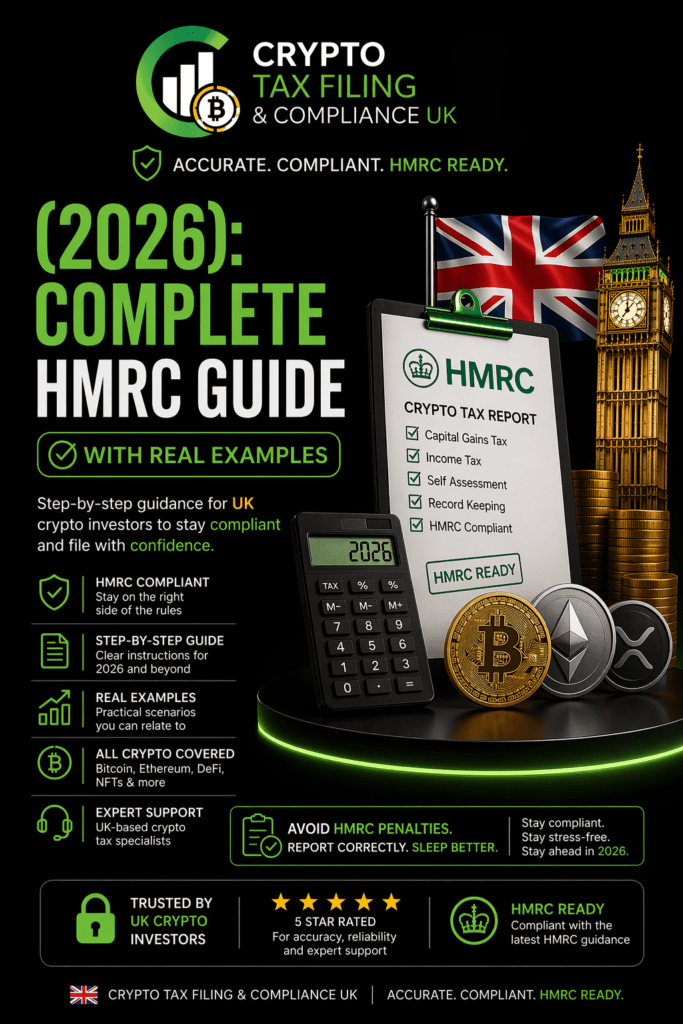
Crypto Tax Filing and Compliance UK (2026): Complete HMRC Guide with Real Examples.

That’s why understanding crypto tax filing and compliance UK is critical in 2026.

This guide goes beyond basics. You’ll learn:

  • Step-by-step filing process
  • Real tax calculation examples
  • HMRC advanced rules
  • Best tools to simplify everything

All based on how the HM Revenue and Customs actually expects you to report crypto.

Crypto taxes in the UK aren’t just about paying what you owe—they’re about knowing exactly what to report, how to calculate it, and how to avoid costly mistakes.

Most investors don’t fail because they don’t want to comply… they fail because the system is confusing

What Crypto Tax Compliance Means in the UK

Crypto tax compliance means:

  • Reporting all taxable transactions
  • Calculating gains and income correctly
  • Filing accurate Self Assessment returns
  • Keeping detailed records

In the UK:

  • Crypto = property (not currency)
  • Tax types = Capital Gains Tax (CGT) + Income Tax

 This is the foundation of crypto tax filing and compliance UK.

When Do You Need to File Crypto Taxes?

You must report crypto if you:

  • Sold crypto at a profit
  • Traded one crypto for another
  • Used crypto to pay for goods/services
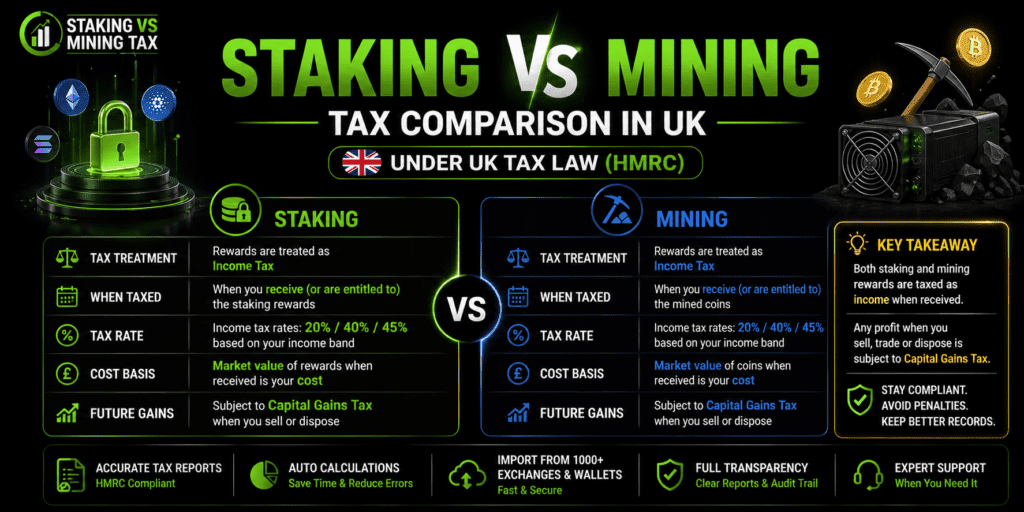
  • Earned crypto (staking, mining, salary)
  • Exceeded CGT allowance

 Even losses should be reported (for future tax savings)

Step-by-Step Crypto Tax Filing Process (Simplified)

Step 1: Collect All Transaction Data

Gather:

  • Exchange history (Binance, Coinbase, etc.)
  • Wallet activity (MetaMask, Ledger)
  • DeFi + NFT transactions

 Missing data = incorrect tax filing

Step 2: Calculate Capital Gains & Income

You need to calculate:

  • Capital gains (selling or trading crypto)
  • Income (staking, mining, airdrops)

HMRC applies pooling rules, not individual coin tracking.

Step 3: Apply Allowances

Use your CGT allowance to reduce taxable gains.

 This is a key optimization step in crypto tax filing and compliance UK

Step 4: Offset Losses

  • Deduct losses from gains
  • Carry forward unused losses

Step 5: Submit Self Assessment

File through the HM Revenue and Customs portal

Real Example: Crypto Tax Filing UK

Let’s make this practical.

Scenario:

  • Bought Bitcoin for £10,000
  • Sold for £18,000 → Gain = £8,000
  • Loss from altcoins = £3,000

 Final taxable gain = £5,000

This is exactly how crypto tax filing and compliance UK works in real life.

HMRC Share Pooling Rules (Advanced but Important)

This is where most people get confused.

HMRC doesn’t track individual coins. Instead, it uses:

1. Same-Day Rule

Transactions on the same day are matched first

2. 30-Day Rule

Rebuy within 30 days → affects loss calculation

3. Section 104 Pool

Remaining assets are averaged into a pool

 This system directly impacts your tax calculation.

Important UK Crypto Tax Deadlines (2026)

Stay compliant with these dates:

  • 31 October – Paper return deadline
  • 31 January – Online filing deadline
  • 31 January – Tax payment due

 Late filing = penalties + interest

Best Tools for Crypto Tax Filing UK

Using tools makes compliance much easier.

Top Tools:

  • Koinly – Best for complex portfolios
  • CoinTracker – Beginner-friendly
  • Recap – UK-focused reporting

These tools automate crypto tax filing and compliance UK calculations.

Common Mistakes That Trigger Problems

Avoid these:

  • Not reporting crypto-to-crypto trades
  • Ignoring DeFi or NFT activity
  • Missing small transactions
  • Incorrect cost basis
  • Poor record keeping

HMRC can track exchange data—don’t assume anonymity

Record-Keeping Requirements (HMRC Rules)

You must keep:

  • Transaction dates
  • GBP value at time of transaction
  • Wallet addresses
  • Exchange records
  • Fees and costs

 Keep records for at least 5 years

2026 Updates: What’s Changing

Crypto tax enforcement is getting stricter.

Expect:

  • More data sharing between exchanges and HMRC
  • Better tracking of DeFi and NFTs
  • Increased compliance checks
  • Potential automation in reporting

 Crypto tax filing and compliance UK is becoming more regulated

When Should You Hire a Crypto Tax Expert?

You should consider professional help if:

  • You trade frequently
  • You use DeFi, NFTs, or staking
  • You run a crypto business
  • You’re unsure about calculations

FAQs

Do I need to report crypto if I didn’t sell?

No, unless you earned it as income.

Are crypto-to-crypto trades taxable?

Yes, they are considered disposals.

What happens if I don’t report crypto taxes?

You may face penalties or HMRC investigation.

Can I reduce my crypto tax legally?

Yes, by using allowances and offsetting losses.

Is crypto tax filing mandatory in the UK?

Yes, if you meet reporting requirements.

Latest Articles

Stay Connected

Inquiry Form
crypto tax filing and compliance UK

7 Crypto Tax Accountants: Expert Crypto Accounting & Tax Filing Services

Need reliable crypto accounting and tax filing services? Contact 7 Crypto Tax Accountants today by call or email to get expert support.

Conclusion

Crypto tax filing doesn’t have to be stressful—but it does require structure and accuracy.

By following crypto tax filing and compliance UK rules, you can:

  • Avoid penalties
  • Reduce tax legally
  • Stay fully compliant

 The winning formula:
Track everything → calculate correctly → file on time

DISCLAIMER

The information presented in this blog is sourced from publicly available and third-party materials. 7 Crypto Tax Accountants does not claim ownership of this content and provides it for general informational purposes only.

7 Crypto Tax Accountants makes no representations or warranties regarding the accuracy, completeness, or reliability of the information. You should not treat this content as financial, legal, or tax advice.

7 Crypto Tax Accountants is not responsible for any decisions, losses, or damages resulting from the use of this information. Until You  consult with 7 Crypto Tax Accountants before taking any action related to crypto taxation or financial matters.